

Sure, vacations are relaxing, but the planning process is not. Narrowing down where to go then booking transportation, lodging, and reservations can be time-consuming and exhausting. But Skyscanner’s 2026 Travel Trends report indicates travelers are working smarter, not harder in the year ahead. Skyscanner’s findings reveal travelers will use artificial intelligence (AI) to plan vacations, with 37% using it research destinations, 33% using it to generate travel plans, and 32% using it to find the best deals on flights and hotels.
If you think AI doesn’t have a place into the travel planning process, trust me when I tell you I thought the same thing. However, after conducting my own research, I have to say that I am fully in favor of this. According to Analytics Insight, most popular AI systems (think: ChatGPT, Microsoft Copilot, etc.) are large language models (LLMs) designed to condense swaths of information into a digestible and readable format. This means that AI can do the bulk of the heavy lifting for you during travel planning.
So without further ado, let’s get into it. Keep scrolling to learn how to use AI to plan your next vacation.
How to use AI to plan your next vacation:
1. Decide where you want to go
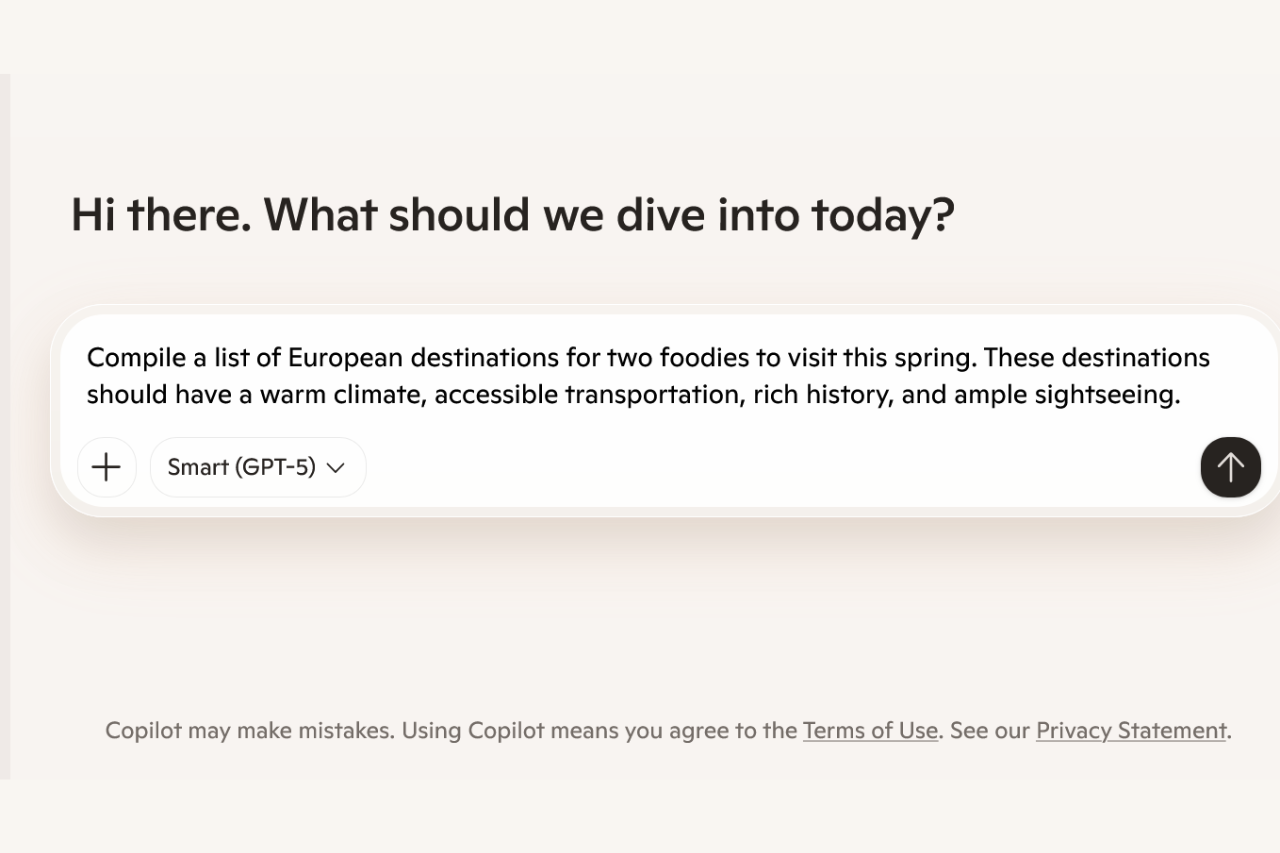
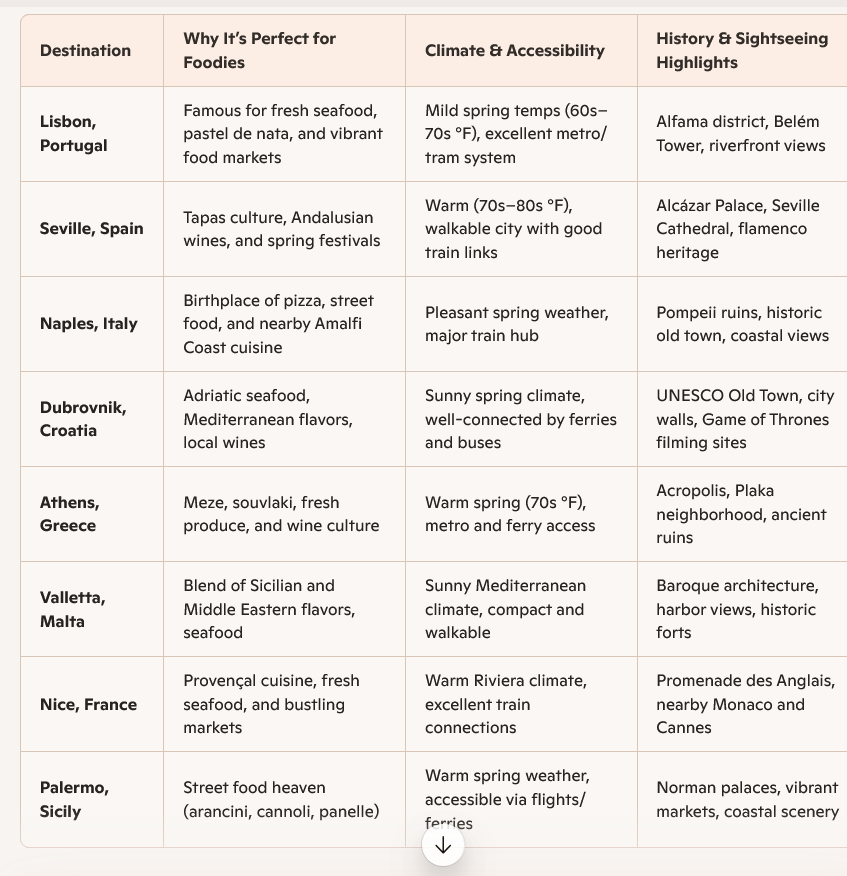
It goes without saying, but the first thing you have to do is decide where you’re going to vacation. To do this, ask AI to create a list of potential destinations for you. Being specific about the kind of trip you’re looking for is key here; this will generate a more comprehensive list for you to review. So include details in your prompt, like how many people will be traveling, your desired climate, activities you’re interested in, and so forth.
2. Plan your itinerary
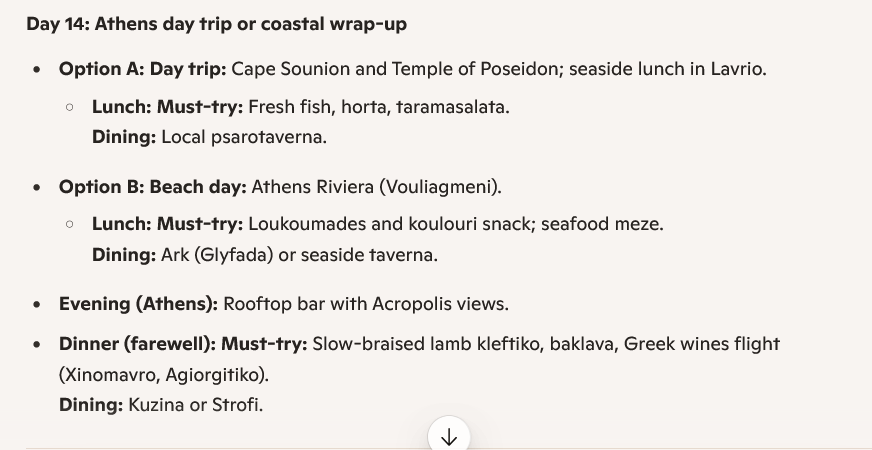
Once you’ve decided where you want to visit, you can use AI to draw up a personalized travel itinerary for you. Like step one, being specific is also key here since it’ll generate a more detailed travel plan for you.
That said, it’s important to remember that performing your own due diligence is still vital even with the help of AI. Technology isn’t foolproof, and AI can still make mistakes. Always double check and confirm if the places on your itinerary are still around and open to tourists. Also, use this as an opportunity to find out which languages are spoken at these places. This is especially helpful if you’re traveling to a foreign country and don’t speak its native language.


RELATED READ: How To Become Rich Overnight, According to an Expert
3. Find travel and lodging
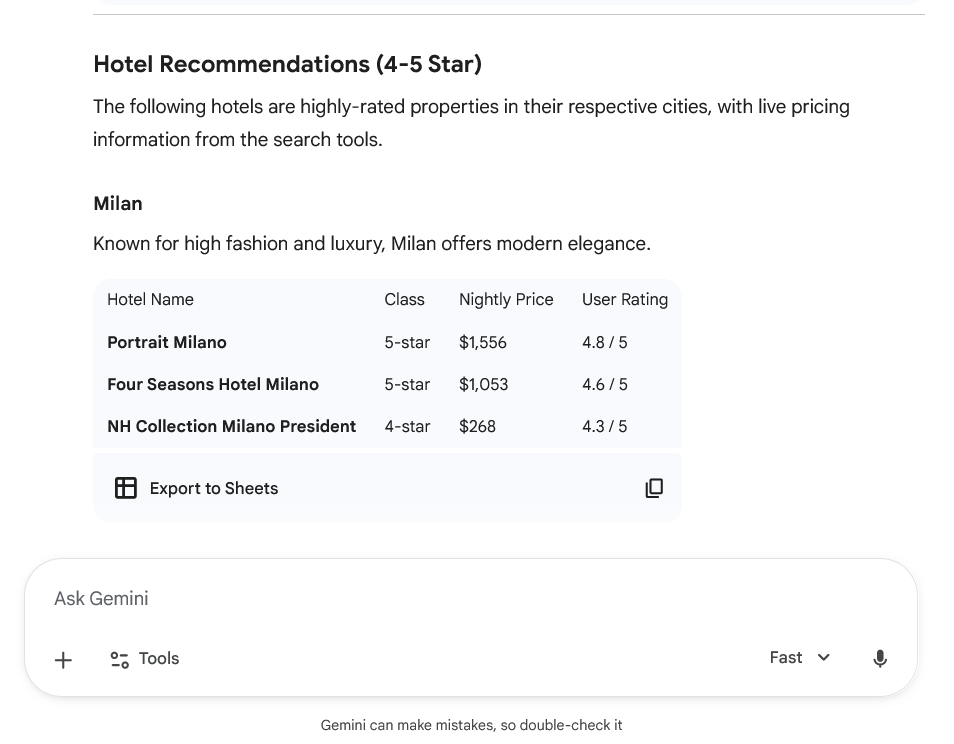
Additionally, use AI to find the best deals on travel and lodging for your trip. While you can theoretically use any AI platform to do this, MIT Technology Review suggests using Google Gemini if you have a Google account. This platform integrates Google Flights and Google Hotels into its system and pulls real-time information from Google’s partner companies. This subsequently makes it easy to compare prices, accommodations and travel times to find the best deals. Plus, you can also export the information to Google Sheets for reference.
4. Book the trip
Once you’ve completed the steps above, booking the trip is your last and final step. Go over everything from start to finish with a fine-tooth comb, and make the reservation once you feel confident. After that, you can then turn your attention toward shopping and planning a capsule wardrobe for your upcoming getaway. Cheers to jet setting!